After a long time of waiting, PostgreSQL 9. This option basically helps to perform DML actions like, Insert IF not Exists , Update IF Exists. Previously, we have to use upsert or merge statement to do this kind of operation. I have also published an article on it. Sometimes, it is more efficient to list the values that you do not want, as opposed to the values that you do want. If the row does not exist it will return the inserted one else the existing one.
The data itself is not a lot, and the condition is not complex, but the hitting frequency is a lot. PostgreSQL treats LEFT JOIN and NOT EXISTS equally, using same execution plan for both of them (namely a Hash Anti Join for the example above). B) NOT EXISTS example.
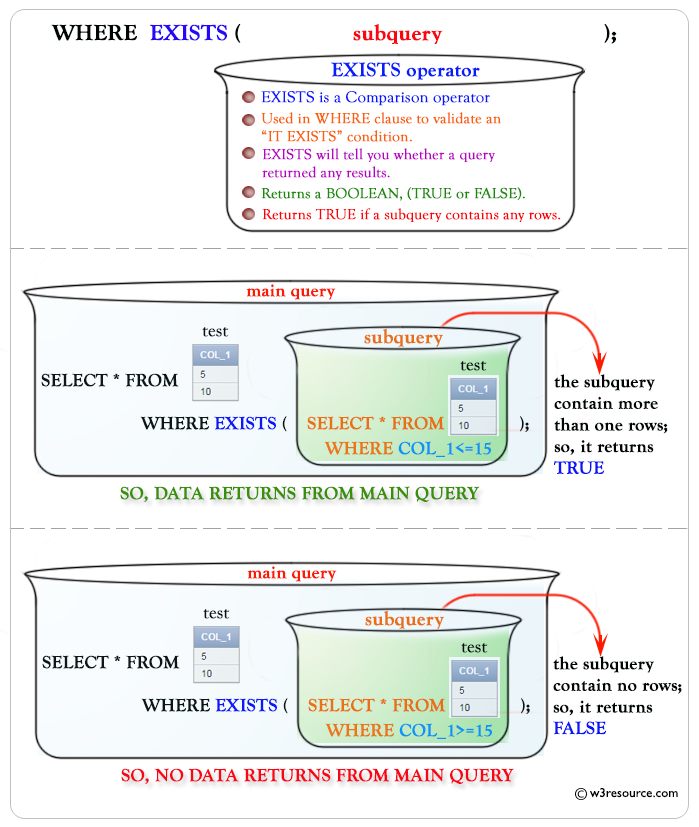
NOT EXISTS is opposite to EXISTS , meaning that if the subquery returns no row, NOT EXISTS returns true. If the subquery returns any rows, NOT EXISTS returns false. The following example returns customers have not made any payment that greater than 11. TusharJain prior to PostgreSQL 9. UPSERT (with CTE) but you may experience problems with race conditions and it will not be performant as 9. There is a good detail about upsert on this blog (in the updated area at the bottom) including some links if you want to read more about the details. The PostgreSQL EXISTS condition is used in combination with a subquery and is considered to be met if the subquery returns at least one row.